 RecVault
Keep eye contact, not a notebook
People talk more freely when you are listening than when you are writing. Record the interview and stay in the conversation. Drop a bookmark when you hear a line you know you will use.
From an hour of audio to the one sentence
Transcribing by hand takes several times the length of the recording. RecVault returns a transcript in about a minute. Search for a name or a phrase across all your interviews and the matching sentences appear with their recordings.
Every line is timestamped. Before you publish or cite a quote, tap the line and listen to it. Speech recognition makes mistakes, and the audio is the record.
Organised by project
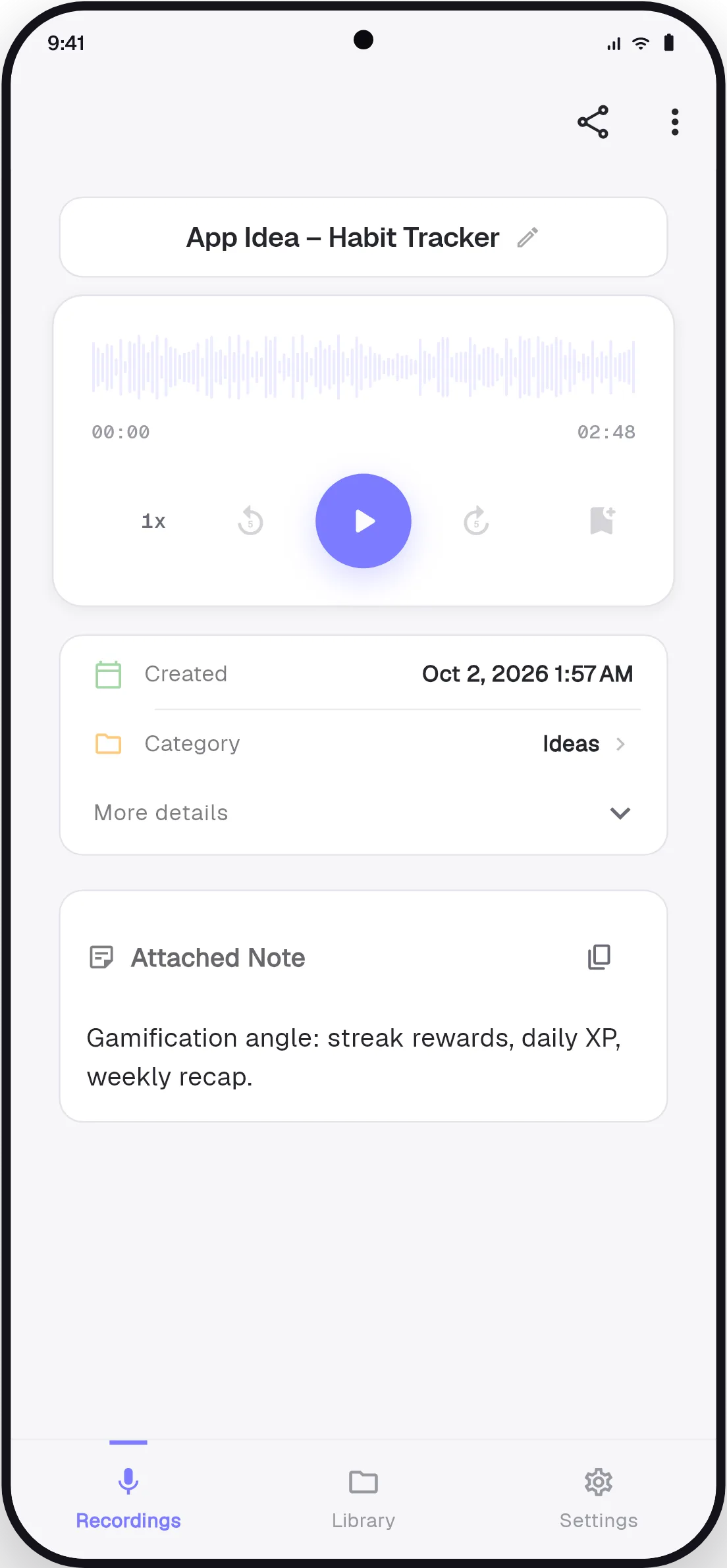
Create a category for each story, study or hiring round. Attach notes to a recording with context you will want later: who it was, where, what to follow up. Share the audio or the transcript to any app when you need it elsewhere.
How to record and transcribe an interview
- Get consent on the recording
Start recording, then ask for permission out loud so the agreement is captured too.
- Place the phone between you
Closer to the person answering. A quiet room makes the biggest difference to accuracy.
- Bookmark strong answers
One tap marks the moment without interrupting.
- Transcribe and verify
Tap Transcribe, search for the quote you need and replay the line before using it.
Good to know
- Transcription covers up to 10 minutes per recording. Pausing to start a new recording between question blocks keeps each part within that.
- For research interviews, check what your ethics approval says about where audio may be processed.
- Recordings live only on your phone. Share copies somewhere safe if you need a backup.